Small sensors and an app that show a household where its water goes, without tracking anything by hand.
- Year
- 2025
- Team
- Solo
- Role
- Research, strategy, business plan, branding, UX/UI
Ripple
- Length
- One semester
- Type
- Smart home system and app
- Focus
- IoT, UX research, Product strategy
- Tools
- FigmaIllustrator
Water you can’t see
A school project for IXD1: a product idea with its business plan, from market research and audiences to revenue and numbers.
Many households in Flanders don’t know how much water they use, or where they waste it.
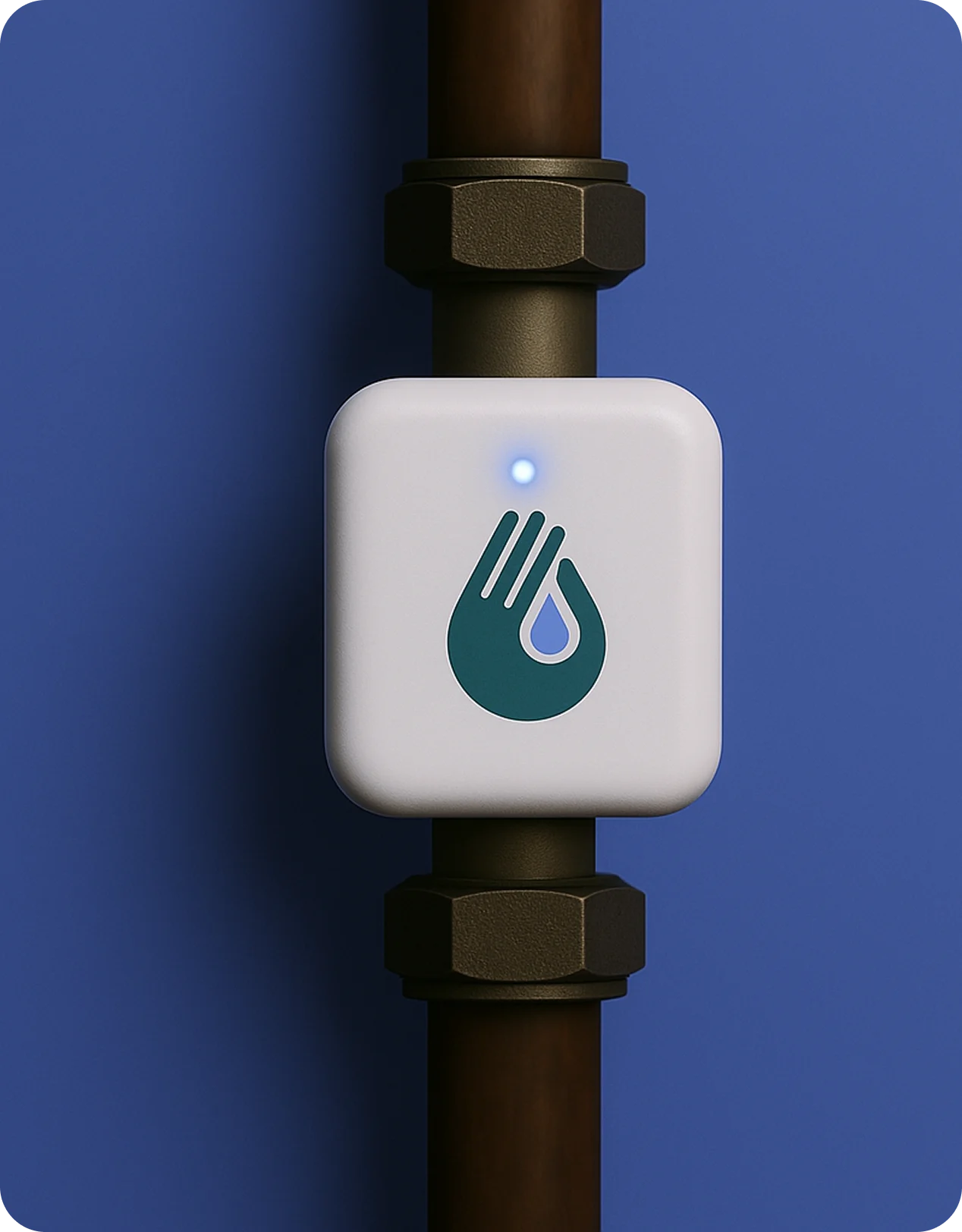
A sensor and an app with live use, insights per room, leak alerts and tips, plus a full business plan.
Nobody wants to track water
I looked at water companies and tools in Flanders (De Watergroep, Farys, Pidpa, HydroScan, iFLUX, Crodeon) and at VITO and EcoCoach. Most of them focus on pipes, not on people’s habits.
- 2
- interviews
- 33
- people answered my survey
- 23 / 33
- said these apps feel too complicated
People wanted to save water, but not if it meant writing things down every day.
Calm, clear, trustworthy
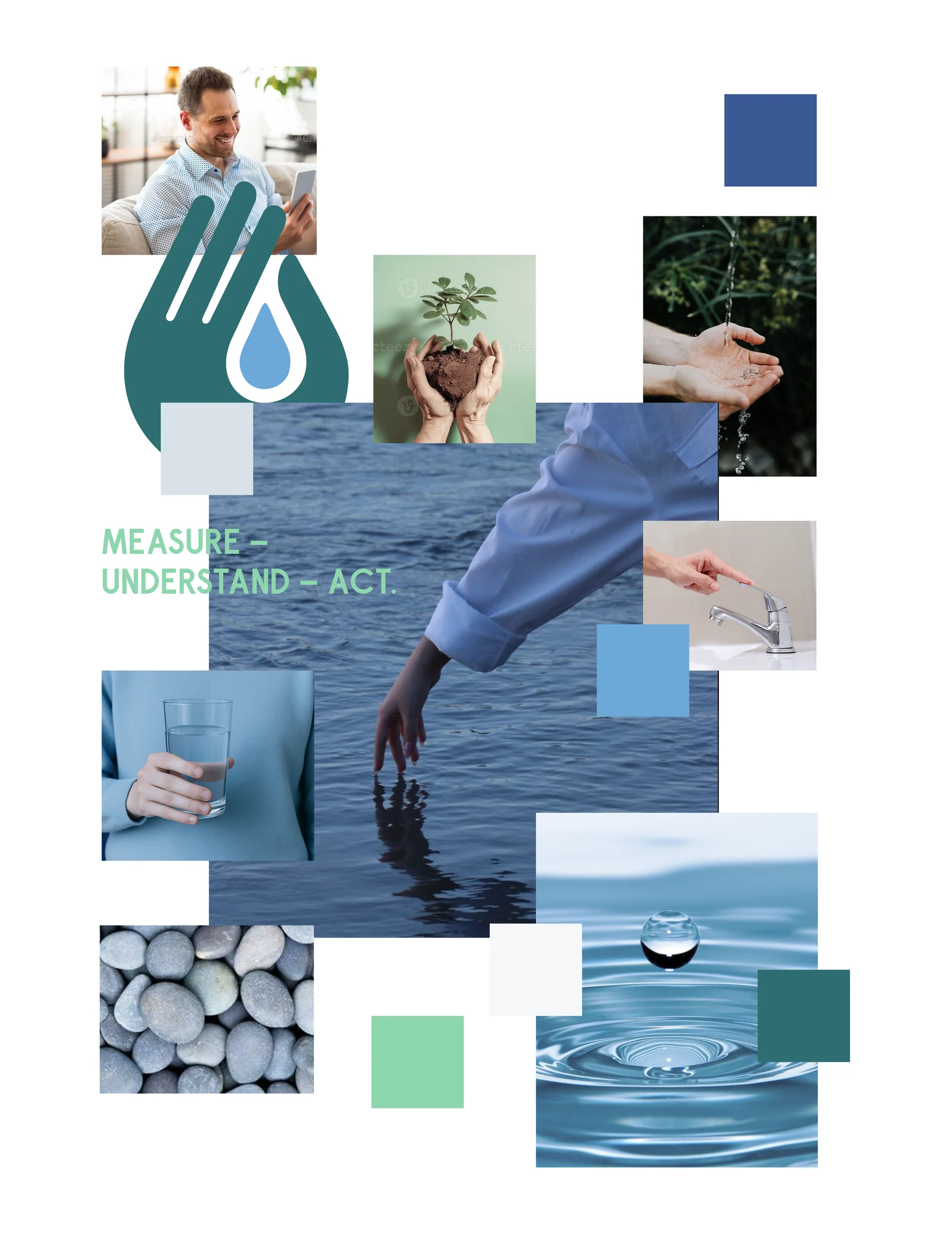
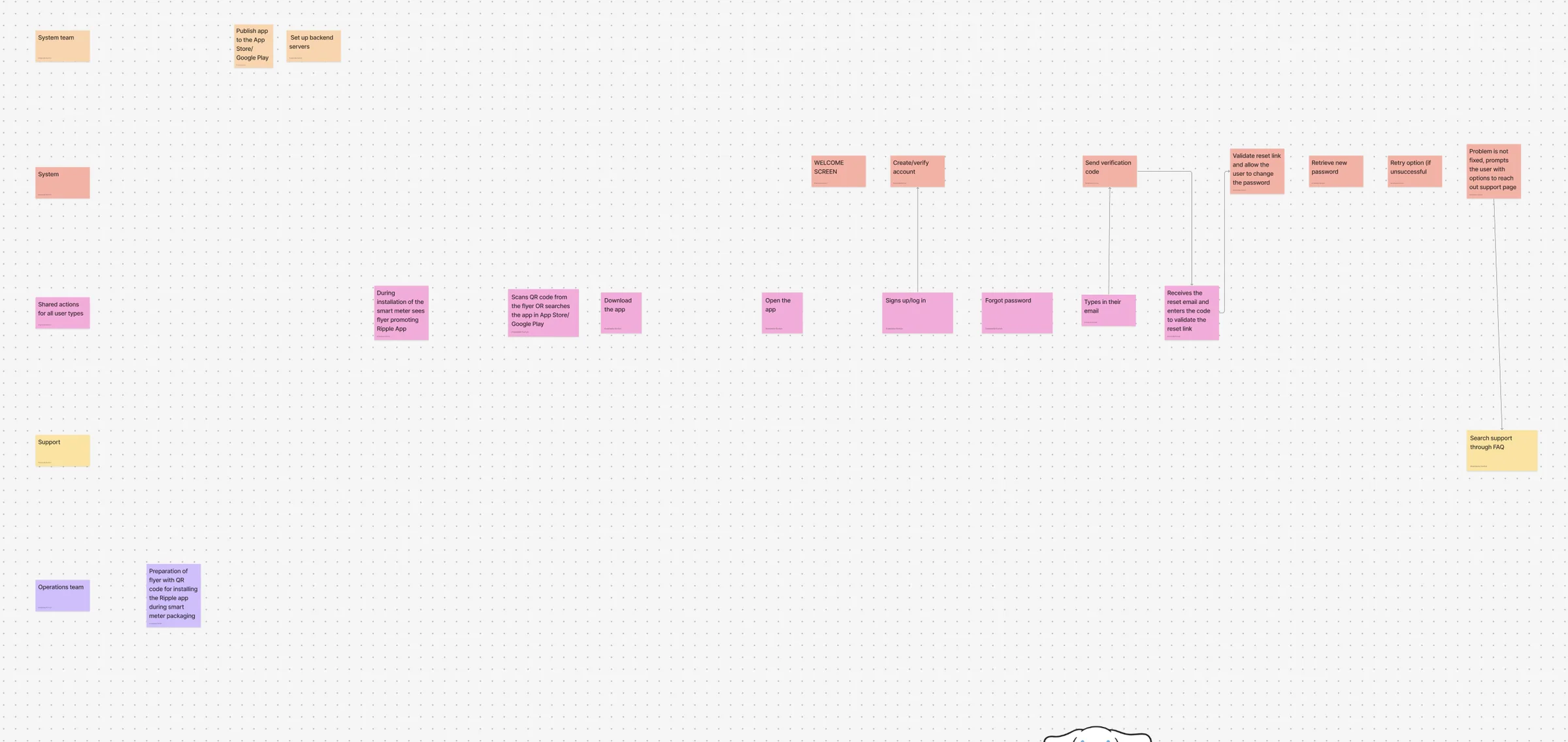
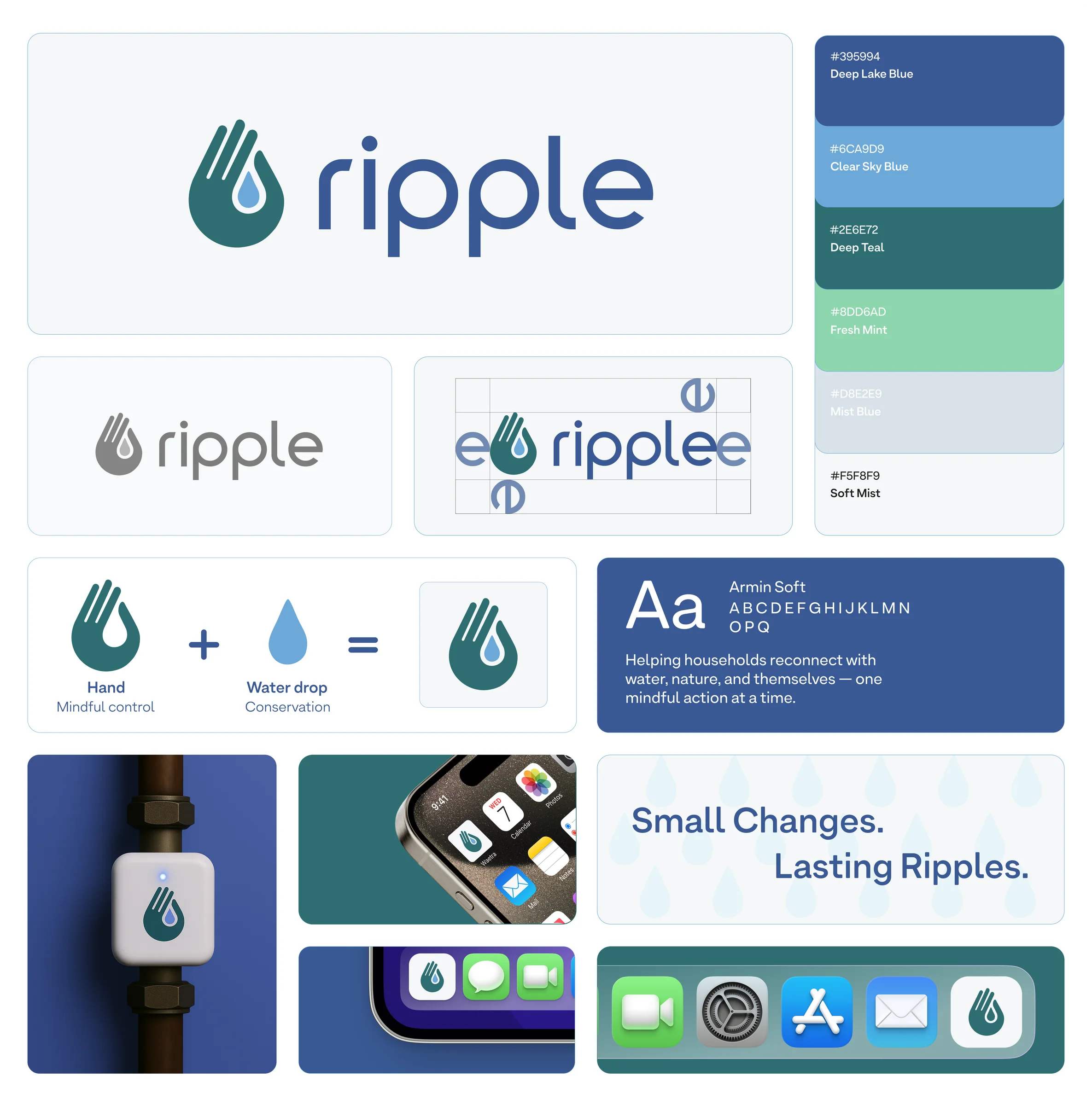
My moodboard went for a calm, clear feeling, close to water and sustainable living. I mapped the app in a sitemap and a user flow, built wireframes in Figma and tried several logo ideas before the final Ripple symbol: a hand holding a drop.
Let the sensor do the work
My teachers reviewed it (design, product, research and business). The research made the priorities clear: automatic tracking, simple information, short summaries, and alerts only when they matter.
The colours of water
Lake blue, sky blue, deep teal and fresh mint, so it feels calm and you can trust what it tells you. All the text is set in Armin Soft.
The decisions that mattered
- 01Automatic tracking
You see your use without adding another daily task.
- 02Sensors you can add
Each home chooses what to follow: the bathroom, the kitchen, the garden.
- 03Tips at the right moment
Short and relevant, so they help instead of nagging.
What I’d add today
I’m proud of how it turned out. Today I’d make it look more modern and add AI where it really helps, like spotting strange use and giving personal tips, if the sensor data is reliable.
AI helped me turn my sketches into quick visuals, then I drew the final vectors myself in Illustrator.
Livio